Categories
Uncategorized

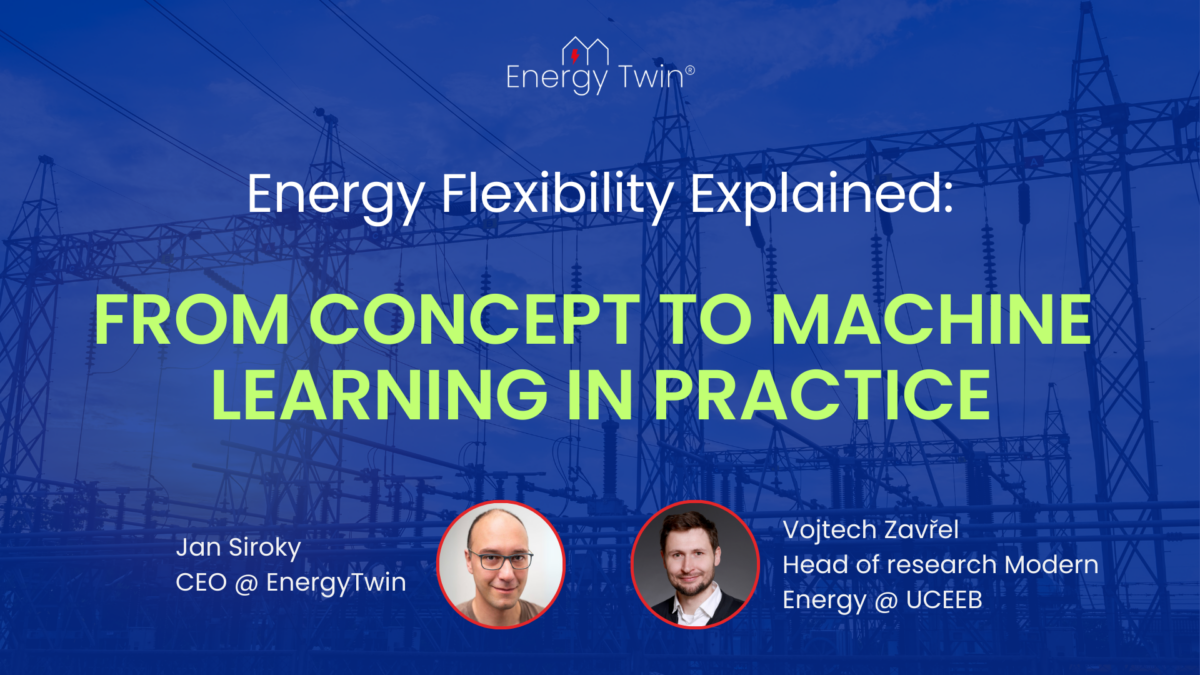
Webinar recording: Energy Flexibility Explained – From Concept to Machine Learning in Practice

Energy Twin and the University Centre for Energy Efficient Buildings (UCEEB) of Czech Technical University in Prague explored the rising importance of load-side flexibility in today’s dynamic energy systems. With variable renewables on the rise, from solar in California to wind in Denmark and hydro in Scandinavia, adapting demand to real-time grid conditions is becoming a major competitive advantage.


This webinar covers the flexibility concept and shows how machine-learning-based predictions of building energy use enable smarter demand response, battery scheduling, and energy cost minimization. Real-world examples demonstrate how predictive models help integrate buildings into decentralised and fast-evolving energy grids.


The topics covered include:
Energy Flexibility: Markets, Challenges, and Opportunities – V. Zavřel, UCEEB

  • Overview of flexibility in global energy systems and growing demand-side potential
  • Impact of renewables and decentralisation on grid dynamics
  • Role of buildings in providing grid flexibility without ready-made solutions
  • Challenges and opportunities for commercial building operators

Predicting Building Energy Use for Flexibility – J. Široký, Energy Twin

  • How AI-driven forecasts enable smarter demand response and cost reduction
  • Case study: ML model peak demand analysis
  • Research insight: Community-driven flexibility challenges

Categories
Uncategorized

Webinar recording: How AI Enhances ESG & Cost Savings Goals in Commercial Buildings?

Categories
Uncategorized

Energy Twin – Can ChatGPT help energy engineers?

Using ChatGPT has become a huge trend.  It is supposed to be able to make many professions more efficient – why not energy engineers? We have decided to give it a try and integrate it to our Energy Twin extension for SkySpark.

Energy Twin and ChatGPT

We have been experimenting with various ways of summarizing results provided by our SkySpark extension Energy Twin. After successfully integrating OpenAI API into SkySpark we tried various tests, let’s have a look at two of them.

We know that generative AI cannot provide complex calculations, however, one could expect that summing 12 numbers wouldn’t be such an issue. See the screenshot above, where it provides the correct equation with the (always) wrong result with its usual confidence.


On the other hand, with the same input data, it can provide you with a nice poem. 

We’re still scratching our heads about how to monetise the ability to generate poems about energy conservation.

Categories
Uncategorized

Energy Twin – Example of utilising Machine Learning in the Energy Sector

Let us show you how Energy Twin utilises machine learning in a real-world example.

Take an extensive building portfolio. Human experts cannot oversee hundreds of key measurements in real-time. How can we efficiently monitor electrical energy consumption and detect anomalies?

The answer is – machine learning. Energy Twin analysed the electrical energy meter of more than 150 buildings. A comprehensive overview of anomalies across the entire portfolio can be provided within minutes with identified candidates for detailed inspection using models of prediction and measured data.

This way, experts spend their valuable time only on the problematic buildings and leave the tedious work of monitoring all of the buildings to Energy Twin.

Detected anomalies were caused by various reasons – from local heaters with no setback to air doors manual regime override or wrong setup of an electrical meter. Such faults can remain undetected without using machine learning, resulting in unnecessary building operation costs.

Categories
Uncategorized

Evaluation of Covid 19 Impacts on Energy Consumption Using Machine Learning

SkyFoundry has published a new Energy Twin case study. In this case study, we focus on the electrical energy consumption of three shopping malls during the covid 19 pandemics.

Using the Energy Twin, we can evaluate average weekly profiles for each period, compensating for the effect of the different outdoor temperatures. The Energy Twin model predicts how the energy consumption would look like with real weather conditions. We then compare the difference between measured data and Energy Twin model prediction.